Are 3D Printed Tankards Safe to Drink From?
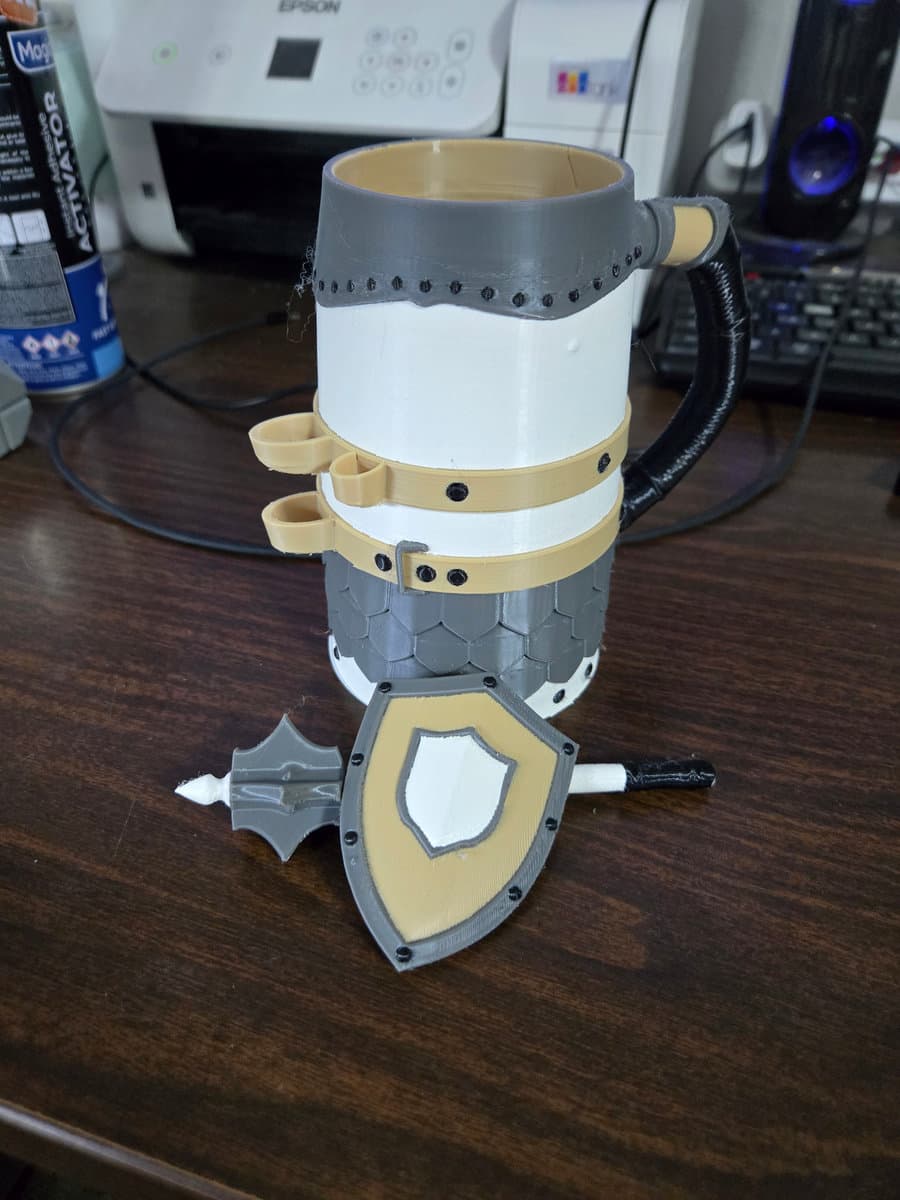
The short answer is no, not directly, and the reason has little to do with the plastic. Here is what the printer manufacturers actually say, and how to use a printed tankard at the table anyway.
Everything here is written from prints that came off the plate in this shop, with the failures left in. Where a guide relies on someone else's testing or a manufacturer's documentation, it says so and links to it.

The short answer is no, not directly, and the reason has little to do with the plastic. Here is what the printer manufacturers actually say, and how to use a printed tankard at the table anyway.

Buying a file and owning a design are two different things. Here is what a commercial print license actually grants, what Creative Commons terms mean when you meet them, and how to run a market stall without a licensing problem.

You do not need an automatic material system to print in more than one color. Here is the layer change method, where it works brilliantly, and the limits worth knowing before you start.

What makes a printed dice tower tumble dice properly instead of jamming them, and the slicer settings we use on every tower that leaves this shop.

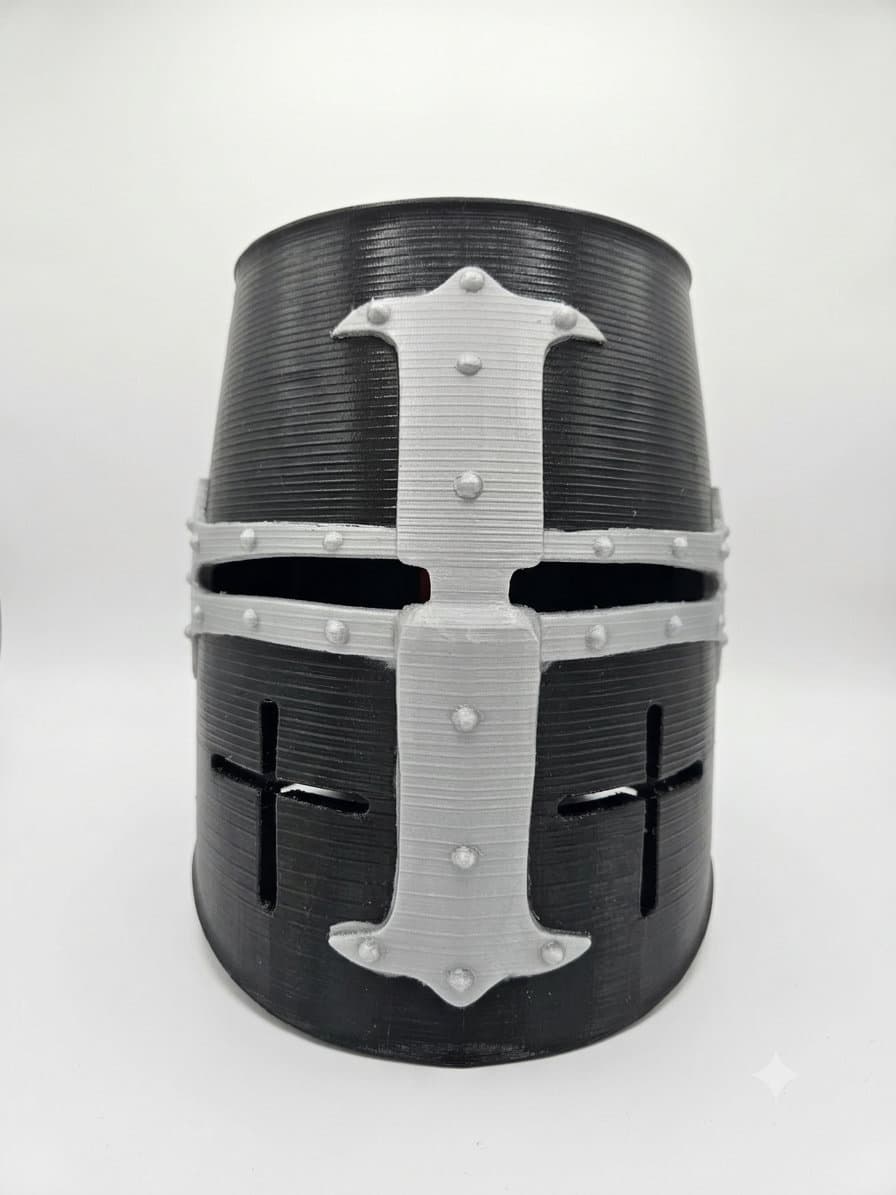
How to size a printed helm to your own head, which filament survives being worn, and the finishing steps that take a helm from visible layer lines to something that reads as metal.

Filament machines and resin machines are not competing for the same prints. Here is which of these designs belongs on which, and why starting with filament is usually the right call.

Articulated prints come off the plate in one piece with working joints, or they come off as a solid lump. The difference is usually four settings, and one of them is your first layer.