This is the question we are asked more than any other, usually by somebody about to book their first market stall. The answer for the files in this shop is yes, and the reason the question needs a whole article is that "I bought the file" and "I own the design" are not the same thing, and the gap between them is where people get into trouble.
Three separate things, often confused
When you download a model, three different sets of rules are in play at once.
Who owns the design. The designer does, always. Buying a file does not transfer that. What you buy is permission to do particular things with it.
What the license grants you. This is the part that varies wildly between shops and platforms, and it is the part you need to read.
What the platform rules say. If you sell on a marketplace, that marketplace has its own terms about printed goods and intellectual property on top of whatever the designer allowed.
Only the second of those is negotiable, and it is written down. For every file sold here it is on the license page, in short enough form to read before you print.
What this shop grants
Quoting our own terms rather than summarizing them loosely:
By purchasing this file you agree to the right to sell any physical print only. Never sell any digital files, doing so will result in a permanent ban from all future files and could result in legal implications.
In practice that means you can:
- Print as many copies as you like
- Sell your physical prints, at markets, conventions, in your shop or online
- Resize a model to fit your printer
- Paint, finish and photograph your prints however you like
And you cannot:
- Sell, share, trade or give away the digital files, modified or not
- Sell remakes or remixes of a design as files
- Claim ownership of the design itself
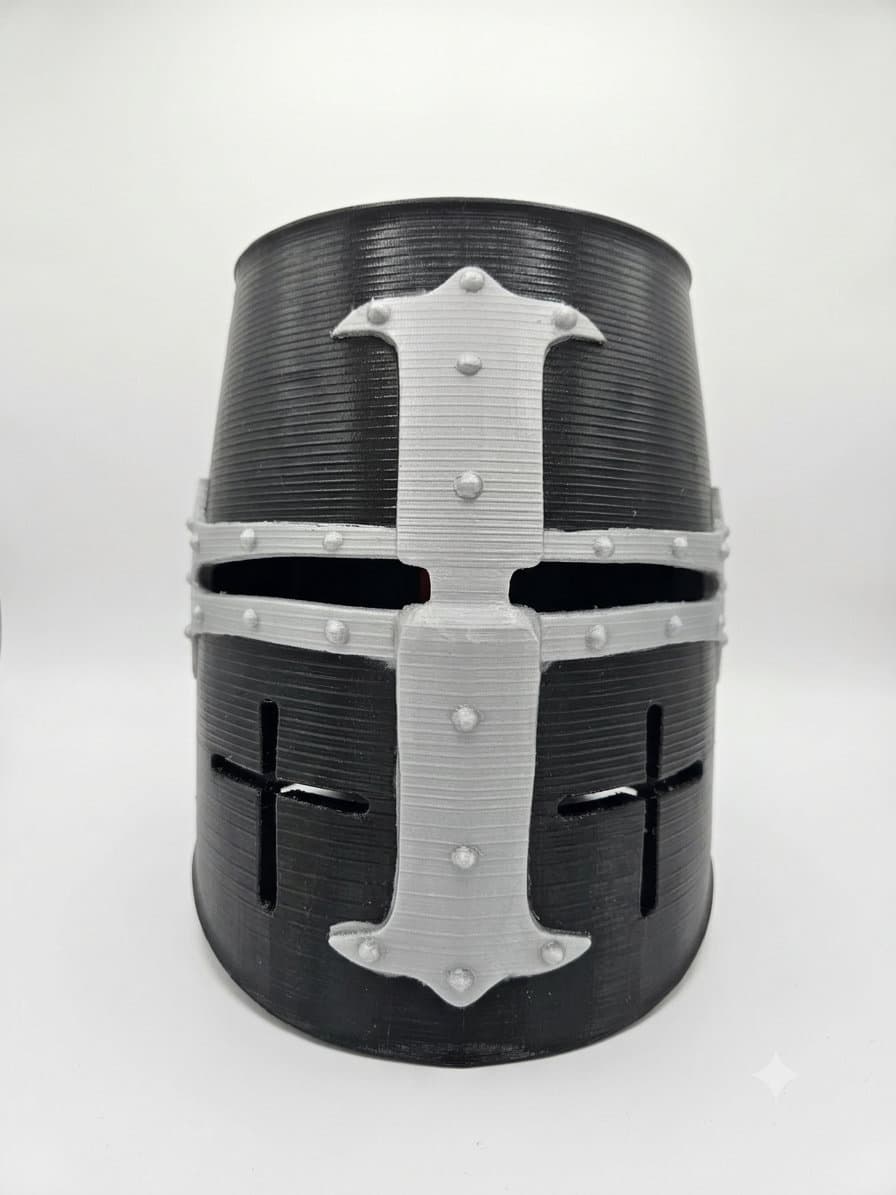
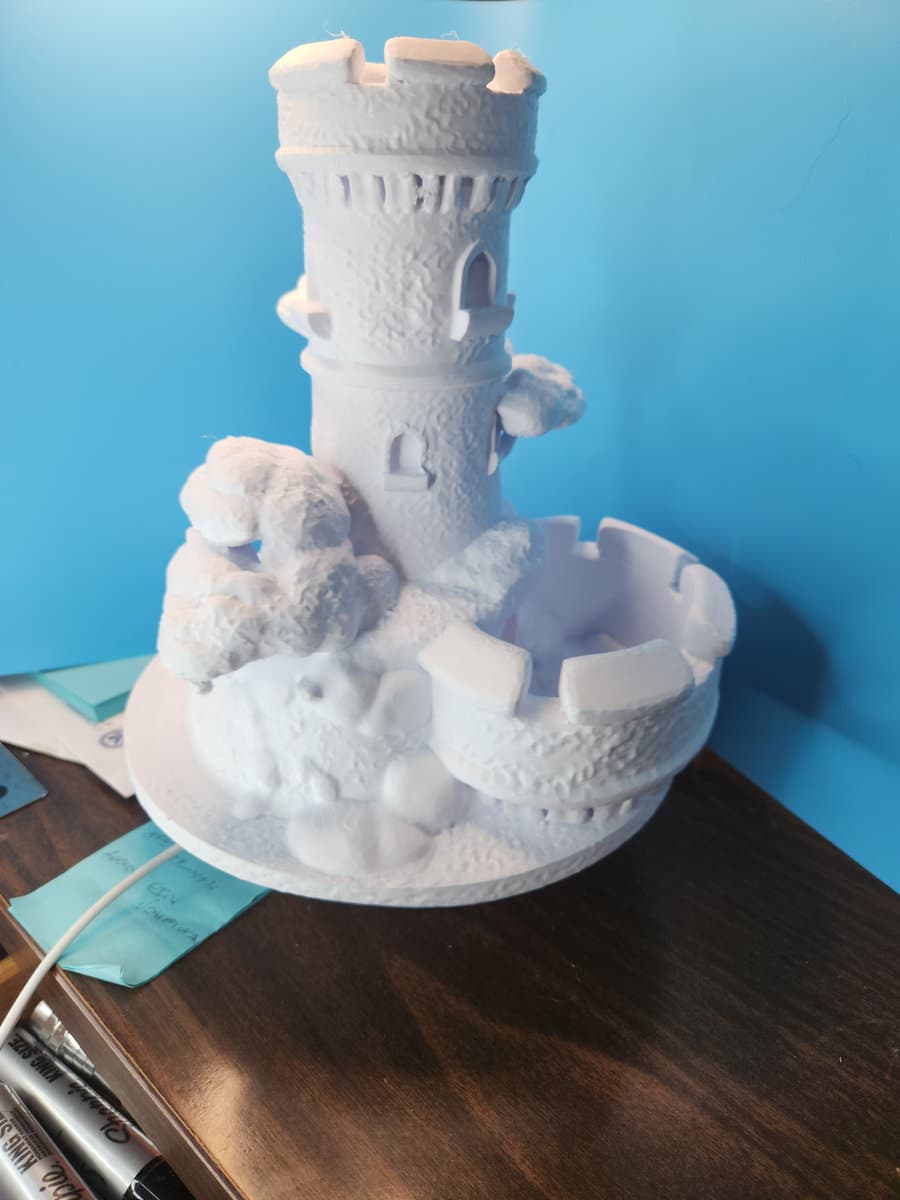
So a Rook Tower printed in your colours and sold at a convention is fine. Twenty of them is fine. A Dark Crusader Great Helm printed, sanded, painted and sold as a finished prop is fine. Sending the tower file to the person on the next stall is not, even for free, even once.
Two details worth knowing. Files downloaded through the monthly membership carry the same commercial print license, and prints you made while you were a member stay yours to sell after you leave. And some files carry their own terms on the listing: the Mathilda's Madness originals, for instance, allow resizing to fit your plate and nothing else. Where a listing states its own terms, those apply to that file.
Why file sharing is the line nobody crosses twice
It can look harmless. One file, one friend, no money changes hands. The problem is that a shared file does not stay shared once. It gets posted, reposted and bundled, and the designer is then competing with free copies of their own work. For a small shop that is not a lost sale, it is the end of the reason to design anything new.
That is why the penalty is a permanent ban rather than a warning. It is also why we would rather you ask than guess. If you are unsure whether something is allowed, send the question through the contact form and you will get an answer from a person.
When the file is not from a shop
Plenty of models come from free platforms under Creative Commons terms instead. Those are real licenses with real conditions, and three letter combinations decide what you may do. From the Creative Commons descriptions linked at the bottom:
| Term | What it means for selling prints |
|---|---|
| BY | You must credit the creator. Commercial use is allowed |
| BY SA | Credit required, and adaptations must carry the same license |
| BY ND | Credit required, and you may not distribute modified versions |
| BY NC | Noncommercial only. You may not sell the prints |
| BY NC SA | Noncommercial only, same license on adaptations |
| BY NC ND | Noncommercial only, and no modified versions |
The one that catches people is NC. Creative Commons defines noncommercial as not primarily intended for or directed towards commercial advantage or monetary compensation, which rules out the market stall entirely, however much work you put into the print. A free file is not automatically a sellable file, and "it was free to download" has never been a defence.
Attribution under a BY license is a real obligation too, not a courtesy. Name the designer on the listing or on a card at the stall.
Running a stall without a licensing problem
A few habits that keep this simple:
Keep a record. A spreadsheet with the file name, where you bought it, the date, and the license terms. When a marketplace asks you to prove you may sell something, which does happen, you want that list to already exist.
Keep the licenses with the files. Save the license text alongside the model in the same folder. Terms on a web page can change, and your copy is evidence of what you agreed to.
Price your labour, not the file. The file cost a few dollars once. What you are selling is filament, machine hours, failed prints, sanding, paint and your time at the table. Sellers who price against the file cost end up working for nothing.
Do not advertise using the designer's photos unless they say you may. Photograph your own prints. Buyers want to see what they will actually receive, and your own photos are better marketing anyway.
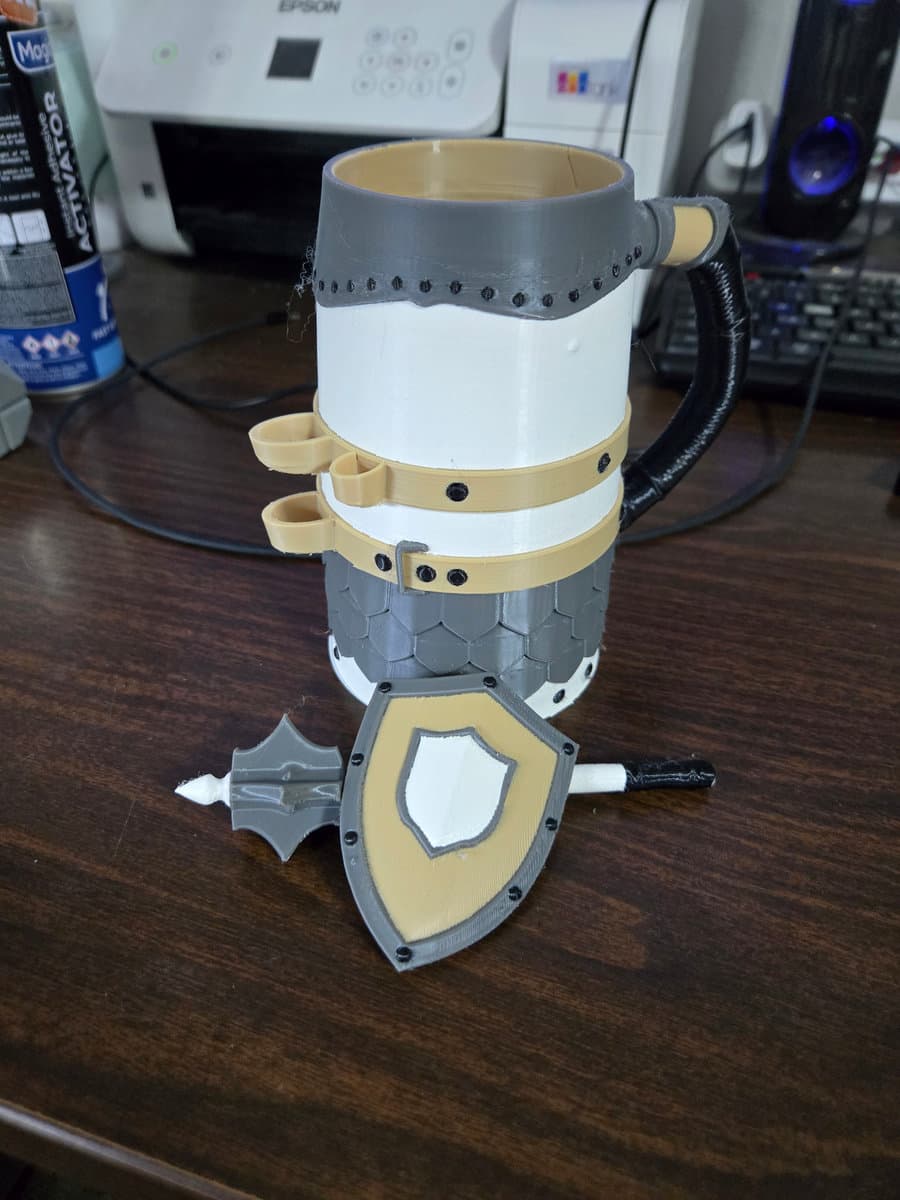
Be honest about the material. This matters most on anything that looks like a drinking vessel or a food item. We have a whole guide on printed tankards for exactly that reason.
Designs you want that nobody sells
If what you need does not exist, commissioning it is usually cheaper than people expect, and you can agree the terms up front. Describe the piece through the custom quote form.
For the printing side of stall work, the dice tower guide and the helm guide cover the two categories that sell best for us, including the settings that stop a batch of twenty turning into a batch of twelve.