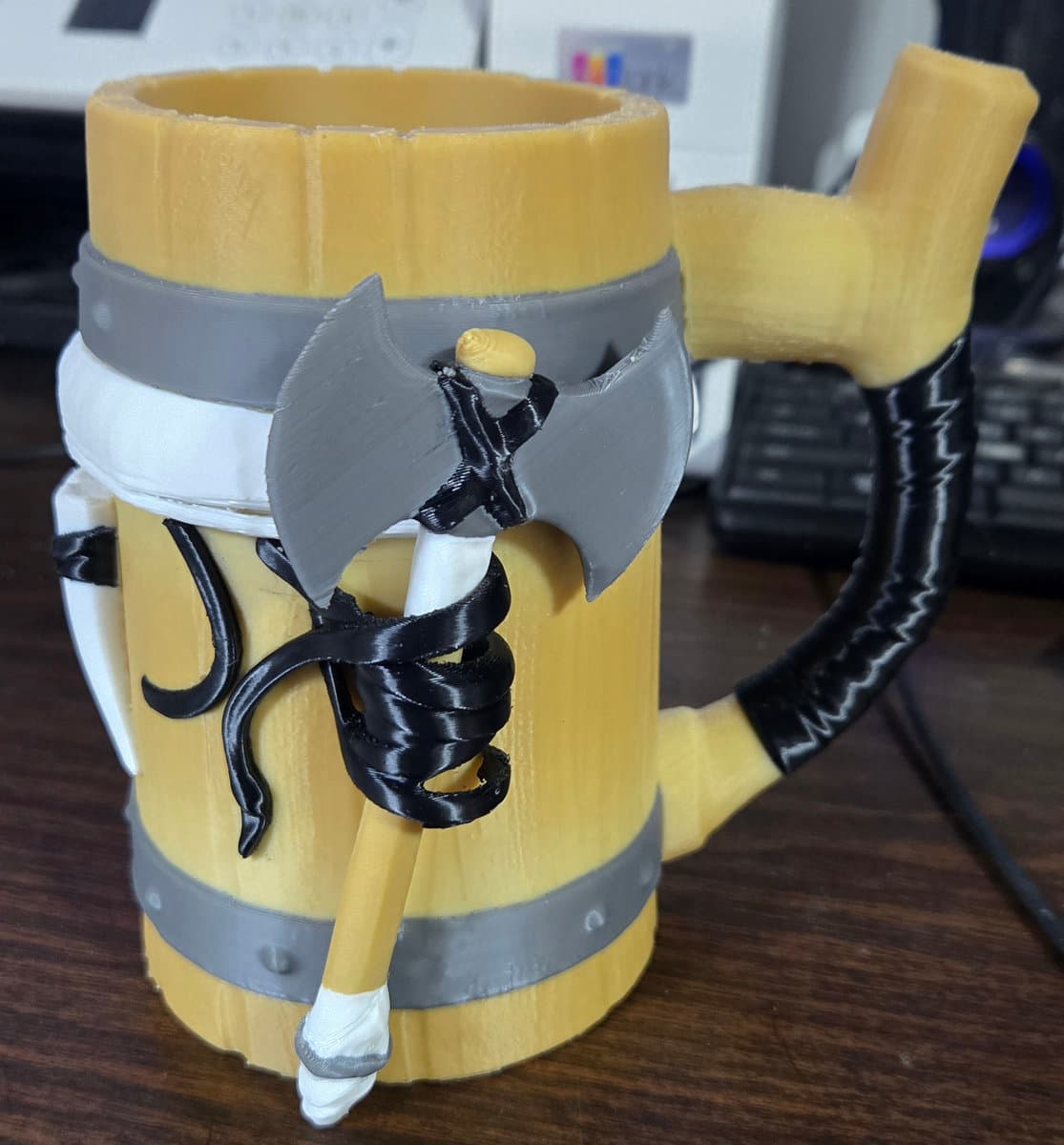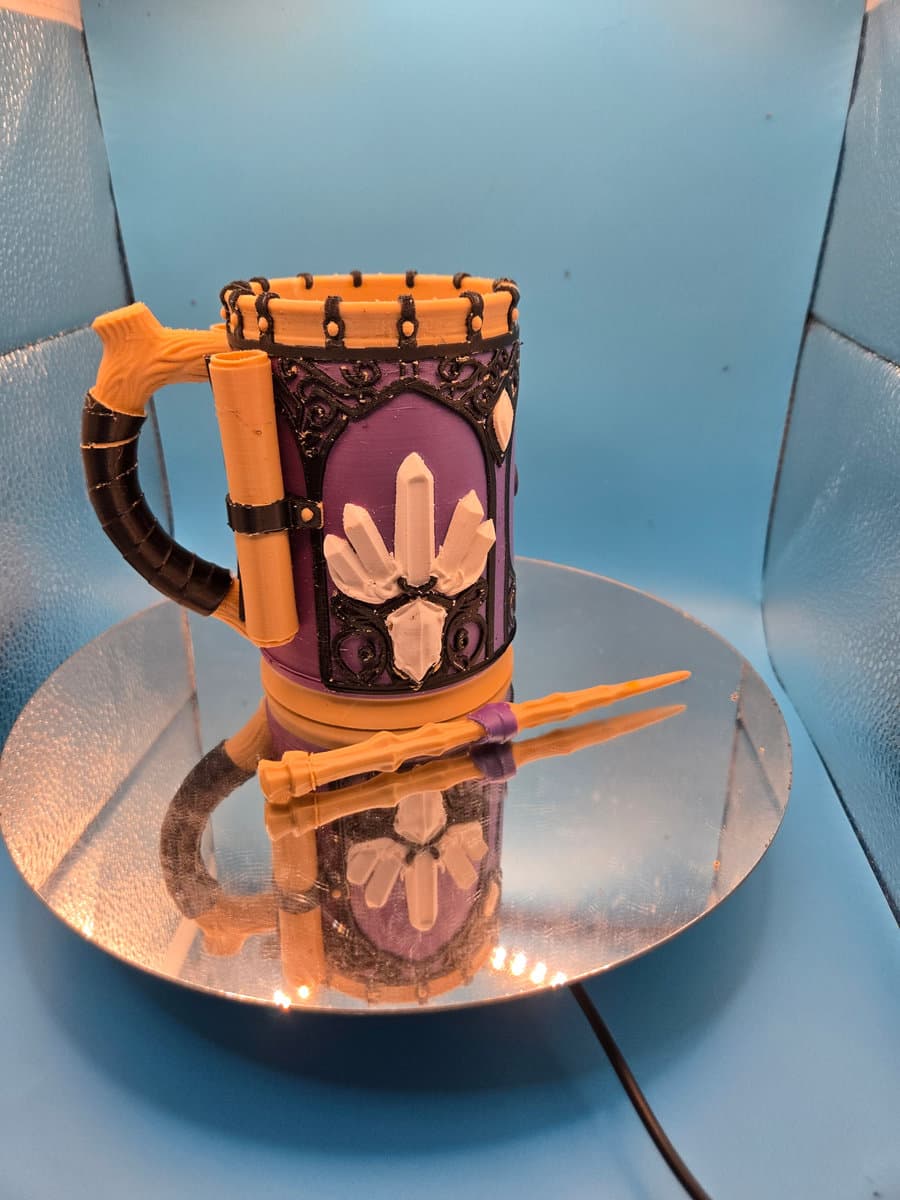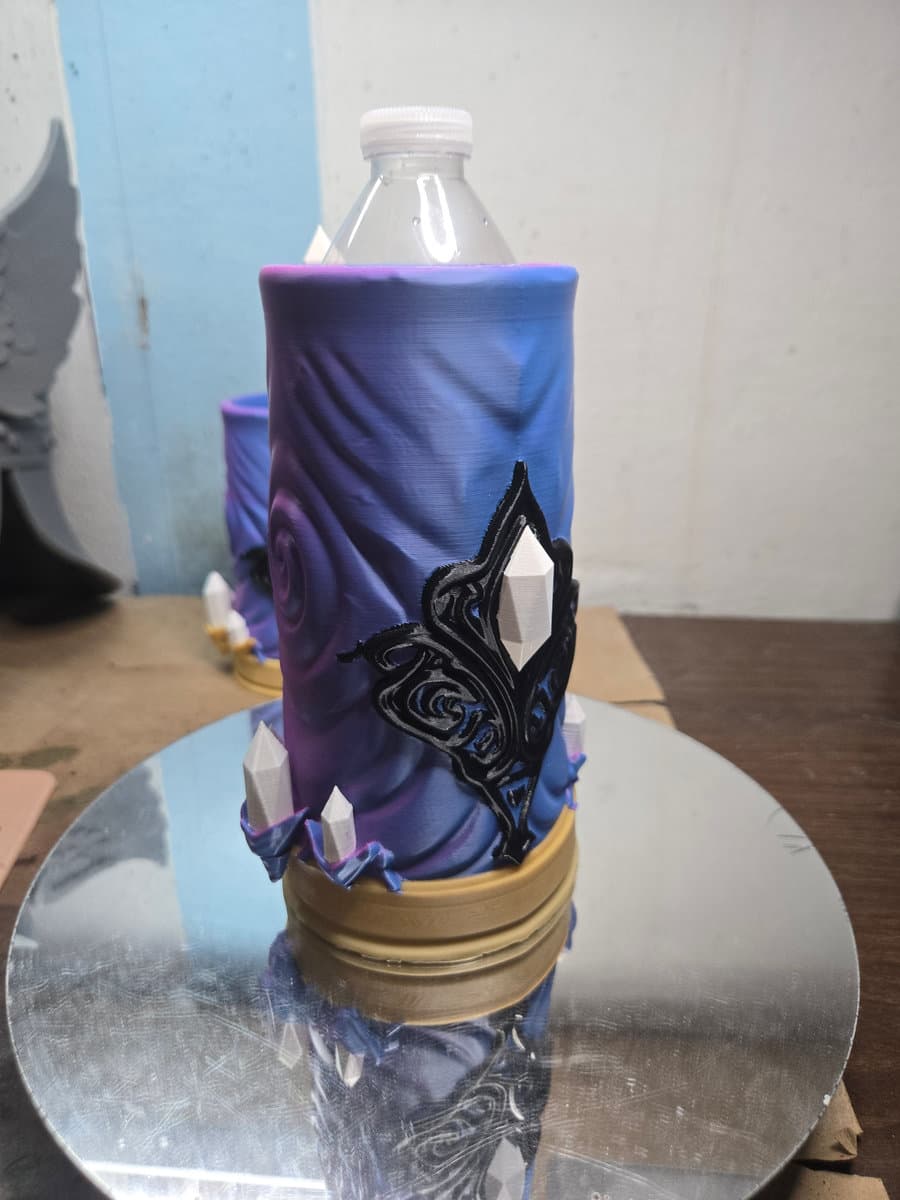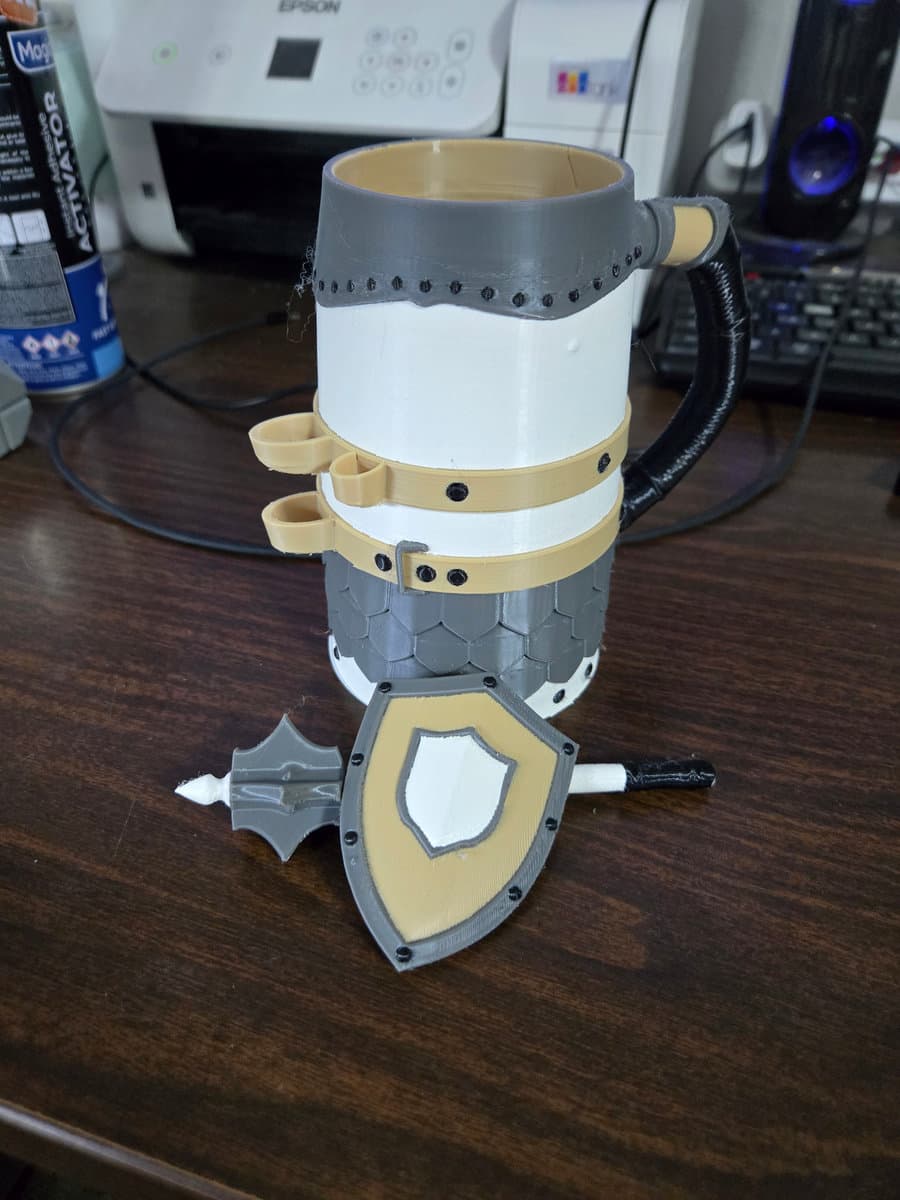
We sell fantasy tankards. We are also not going to tell you they are drinking vessels, because the printer manufacturers are clear on this and so are we.
The short version: use a printed tankard as a sleeve or a display piece, with a glass or stainless steel insert doing the actual holding of your drink. Here is why, and what the sources behind that advice actually say.
Food safe filament is not a food safe object
This is the distinction that gets lost. A spool may be sold as food safe, and that claim can be perfectly true about the raw polymer, while telling you nothing useful about the mug you printed from it.
Printer manufacturers make the point themselves. Prusa describes PLA as a material that is food safe in itself, then advises against printing dishes or anything else that contacts food, because the tiny layers and grooves give bacteria somewhere to live. Their dedicated guidance on food safe printing goes further and is openly skeptical about PLA and PETG as food contact materials, citing both those grooves and the pigments and additives that come along for the ride. Both articles are linked at the bottom of this page.
In the United States, the FDA regulates substances that come into contact with food, including the materials used for packaging and storage, and holds them broadly to the same safety standard as ingredients added to food directly. The relevant question is not whether a polymer appears on some list. It is whether this object, made this way, is safe against food. For a layered print, the answer runs into several problems at once:
- The surface cannot be cleaned. Every layer line is a groove. Scrubbing does not reach the bottom of them, and neither does a dishwasher.
- The colour and the additives are unknown. Pigments, sparkle, and whatever else the manufacturer blended in are not generally certified for food contact.
- The nozzle leaves traces. A standard brass nozzle may contain small amounts of lead, which is why the manufacturer advice for anyone determined to print food contact items includes swapping to a stainless steel nozzle.
- The print is not necessarily solid. Voids between perimeters and infill can hold liquid you will never get out.
Watertight does not mean food safe
It is worth saying plainly, because it trips people up: a tankard that holds water perfectly is still not safe to drink from. Prusa has a separate article making exactly this point. Watertightness is about whether liquid escapes. Food safety is about what the surface does to the liquid while it is in there, and about whether you can get the vessel clean again afterwards. A print can pass the first test and fail the second completely.
Then there is heat. PLA softens at temperatures well below a dishwasher cycle and below a hot drink. Pour coffee into a bare PLA mug and you will watch the handle let go. That single fact rules out the whole category for hot drinks regardless of hygiene.
What to do instead, which still looks great at the table
The approach we use and recommend is simple: the print is the armour, the insert is the cup.
- Buy a plain glass, a stainless steel pint cup or a steel camping mug sized to drop inside the tankard body.
- Print the tankard, finish it however you like, and seal the outside with a clear coat for durability.
- Drop the insert in. Drink from the insert. Wash the insert in the sink or the dishwasher, and keep the print out of the water.
You get the piece you wanted on the table, and the part your mouth touches is glass or steel. If you are printing from one of the class tankard files, check the internal diameter in your slicer before you buy an insert, and scale the model up slightly if you need extra clearance. It is much easier to size the print to a cup you already own than to find a cup that fits a print.
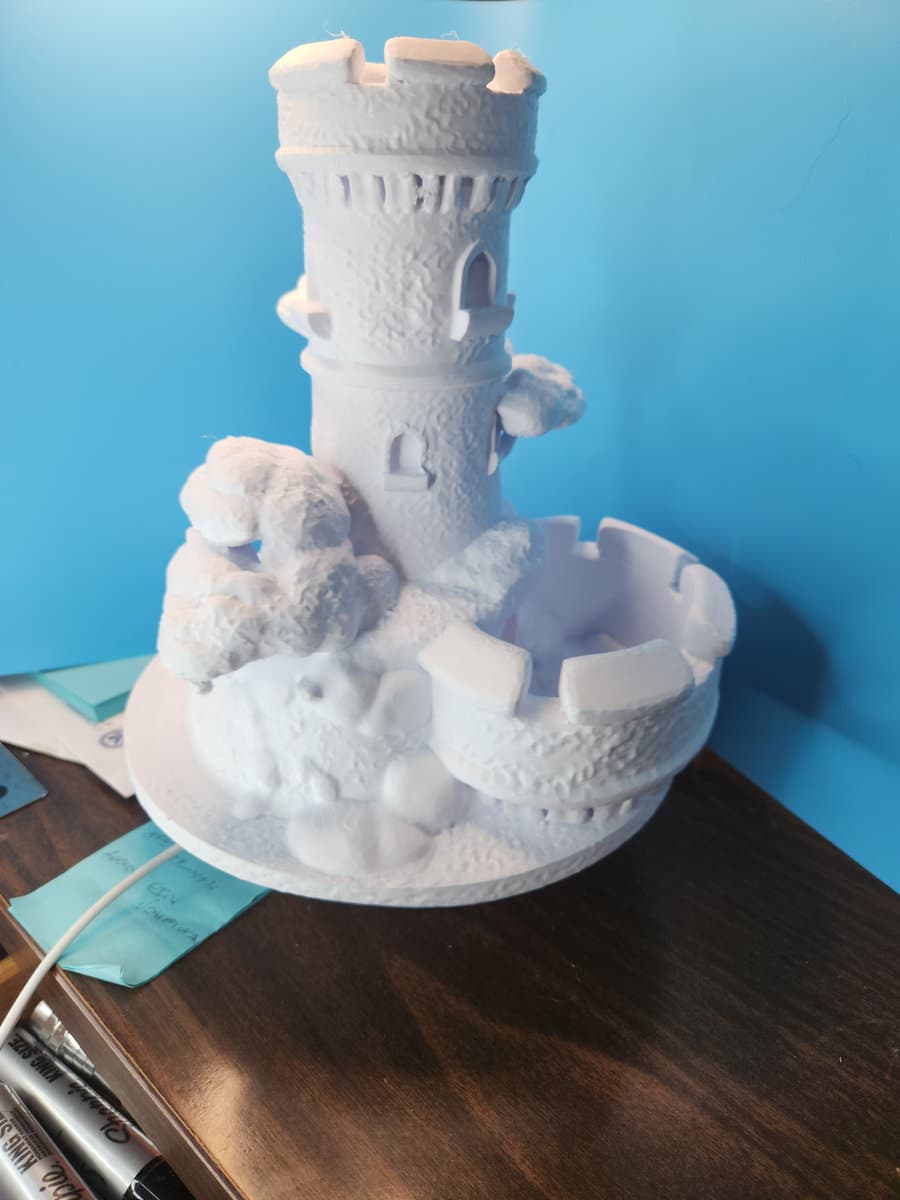
For display use, none of this applies. A tankard on a shelf, on a game table holding dice, or hung on a wall is just a model, and you can finish it however you want. The Cleric's Devotion, the Barbarian's battle tankard, the Bardic Inspiration tankard and the Arcane Wizard tankard and wand set all sit in that category by default, and the whole class tankard collection is designed as table presence first.
Printing one well
Setting the safety question aside, tankards are a satisfying print and a forgiving one:
- Print the body upright. The handle then needs either a support or a well bridged overhang, and the walls take the stress across the layers rather than along them.
- Three perimeters, 10 to 15% infill. Same reasoning as a dice tower. These are shells.
- PETG over PLA if the piece will see any warmth at all, including a sunny shelf.
- Expect to clean up the handle join. It is the first place a drop shows, and the first place a bad overhang shows.
- Seal the outside if you are painting it. A satin clear coat keeps dry brushing from rubbing off during a long campaign.
If you want one that is finished and safe to use
We hand finish tankards to order, including fitting an insert so the piece is usable rather than just decorative. Send the detail through the custom quote form and we will quote it.
And if you print tankards to sell at markets, the commercial print license covers your physical prints. Two things to carry with you if you do: the guidance above about inserts, and the honesty to repeat it to your customers. Telling somebody a printed mug is dishwasher safe is how a good market stall becomes a bad review. The guide on selling prints from files you bought covers the licensing side of stall work.